
Guidelines · · 4 min read
Where the cold chain actually breaks in a clinic
Cold chain gets discussed as a shipping problem, which is the part of it that already has money, packaging and a contract behind it. The unsupervised part starts at the signature and runs until the box is unpacked, and it continues every day the stock sits in a fridge nobody is watching. This is what to check on arrival, what a stock fridge needs that a staff fridge does not, and what to do with a delivery you cannot vouch for.
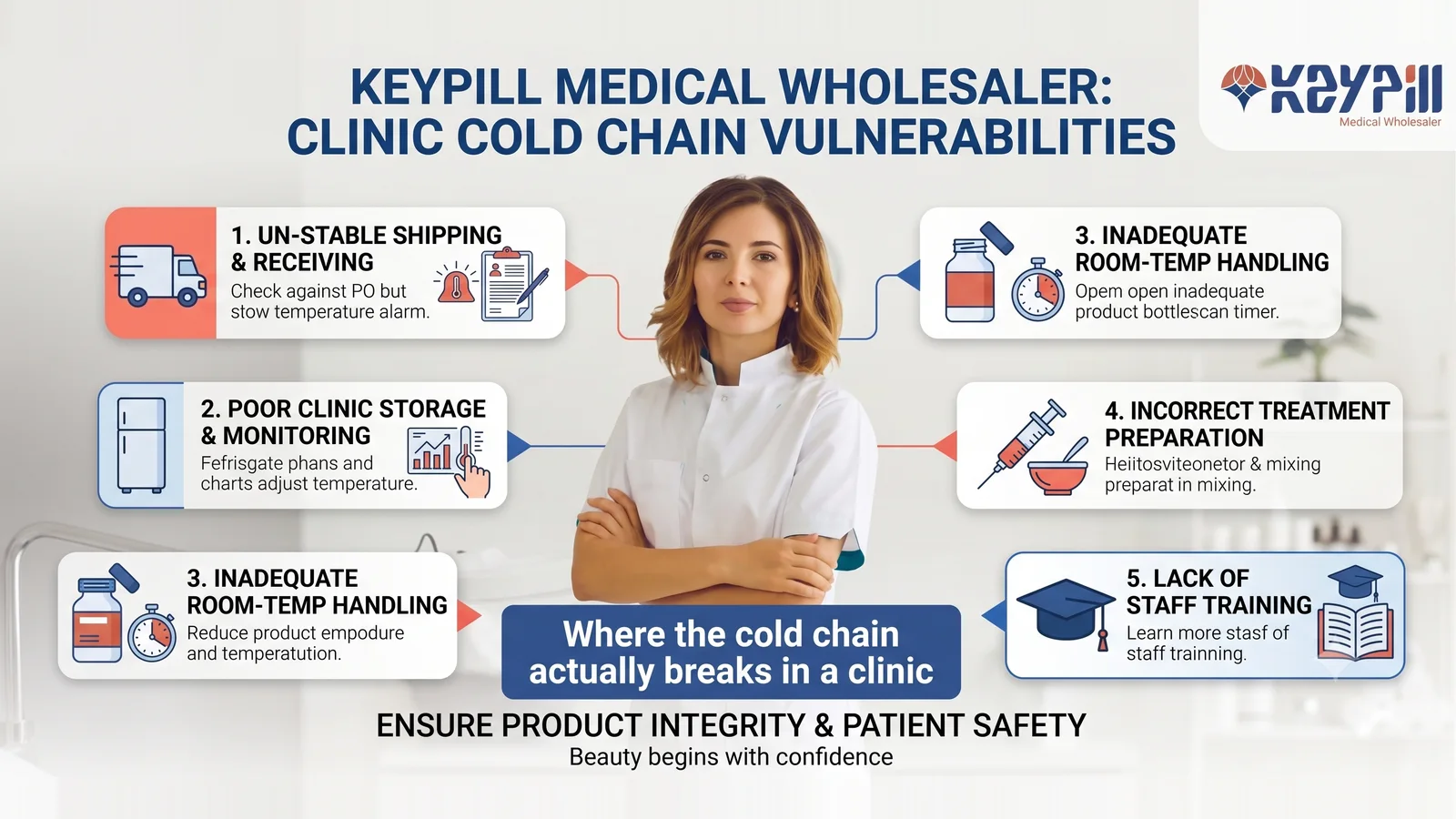
Supervision of a cold chain is not spread evenly along it. In transit, that link is somebody else's problem: it is contracted, packed with material chosen for the journey, and paid for as a line on the invoice. Once the box is signed for it becomes yours, and it is usually handled by whoever happened to be at the desk.
What the van is responsible for
A wholesaler can tell you how a consignment was packed and what the packaging was rated to hold. Nobody can tell you what happened after the signature — whether the box went straight to the fridge, or sat behind reception until the afternoon list finished. Unless a logger travelled in the box and is still running when you open it, nothing records that stretch. It is the only part of the journey with no paperwork attached to it, which is exactly why it is where things go wrong.
So fix that before you buy any equipment. Deliveries need a named owner for each day, a defined place they are put that is not a desk, and a standing rule that cold items come out of the box before anyone looks at the rest of it.
The first ten minutes
Receiving checks are worth doing while the delivery note is still open, not at the end of the day.
- Delivery matches the note: product, presentation, pack size, quantity.
- Batch and lot numbers written against the order, not just the product name.
- Expiry date read off the packaging and compared with what you were quoted. Short-dated stock is legitimate and often cheaper, but it should be a decision rather than a surprise.
- Condition of the outer box: crushing, damp, punctures, signs of being opened and re-taped.
- Coolant packs present, and in the state you expected them to be in. Note it if they are not.
- Any temperature indicator or logger in the box, read before the packaging is thrown away.
- Time of arrival and time it went into the fridge, both written down.
- Storage conditions taken from the IFU for anything you have not stocked before.
That last point carries more weight than it looks. Storage requirements vary by manufacturer, and sometimes between presentations within a single range — a filler, a peel and a mesotherapy cocktail sitting on the same shelf may come with three different sets of instructions. Some products want refrigeration, some want room temperature away from light, and some carry an explicit instruction not to freeze. The authoritative source is the IFU and the manufacturer's own documentation. A supplier should be able to send you both on request. If yours cannot, ask why before the next order goes in.
A stock fridge is not a staff fridge
A domestic fridge is built to keep food acceptably cold, which is a different brief from holding a defined range reliably. If a fridge holds stock, it needs several things a kitchen fridge does not.
- Nothing else in it. No lunches, no milk, nothing that gives staff a reason to open the door.
- A thermometer that records minimum and maximum since it was last reset, so an overnight drift is visible the next morning. A logger with an alarm is better.
- A known internal layout. Product not pressed against the back wall, not in the door, not blocking the vents, with room for air to move.
- Defrost behaviour you understand. Check whether the unit runs an automatic cycle and what that does to the internal temperature.
- A written fallback. Decide now which fridge takes the stock if this one fails on a Saturday, and who holds keys to the building.
- Restricted access appropriate to what you hold.
The log is the only evidence you have
A log exists to answer one question at some later date: was this product held correctly for the whole time we had it. It answers that only if it is continuous. Two habits make it continuous. Readings happen at fixed points — opening and closing — rather than when someone remembers. And what gets recorded is the minimum and maximum since the last reset, not the number showing on the display at the moment of the glance.
Keep the delivery record and the fridge record together, indexed by batch. The batch number is the thread that pulls the rest up: which order it came in on, which day it arrived, which fridge it sat in, what the log said that week. If a patient asks a year later, or an insurer does, that thread is the whole answer.
When you are not sure it stayed cold
You will have deliveries you cannot vouch for. Nobody remembers when it arrived. It was found on reception at five. The indicator is unreadable, or went out with the box.
Quarantine the stock physically and label it, away from product you trust. Write down what you actually know, including the gaps. Then contact the supplier with the batch number, order reference, delivery date and a plain description of what you found — enough for them to check the consignment against their own records and go back to the manufacturer where necessary. Let that answer decide the outcome, not the appearance of the product. Cold chain damage does not have to be visible, and a syringe that looks normal is not evidence of anything.
The cost of the two possible mistakes is not symmetrical. Discarding a sound unit costs you the unit. Using a compromised one costs a treatment outcome, a patient's confidence, and any defence you might have wanted afterwards.
Very little of this is equipment. It is mostly deciding once who owns a delivery, where it goes, and what gets written down — then keeping the record dull enough that nobody argues with it. Clinics that never have a cold chain problem are rarely the ones with the best fridge. They are the ones where the box does not sit on reception.
- guidelines
- dermal-fillers
- mesotherapy
Written for trade customers of Keypills Medical Ltd. It covers purchasing, handling and storage — not clinical practice. Always follow the manufacturer’s instructions for use and your own professional and regulatory obligations for any product you administer.